A championship race day is loud, long, and wonderfully distracting. The cars, riders, or runners arrive in a burst, the crowd reacts before you understand why, and the best moment often happens while you are looking at the wrong corner. That is part of the appeal. But a first visit goes better when the boring parts — transport, gates, weather, food — are handled before the racing starts. This checklist is the one to run through the week before, not on the morning of.
Start With the Official Timetable and a Course Map
Championship events rarely have one race and nothing else. Support categories, warm-ups, autograph sessions, and pit walks fill the schedule, and gates can open hours before the headline race. Download or print the official timetable and mark three times: when gates open, when the first session you care about starts, and when the main race is scheduled. Add a buffer for security and the walk from the station or car park.
A course map is just as important. Look for grandstand numbers, general admission areas, crossing points, toilets, first aid, and exits. If you are meeting people, choose a landmark that does not move — a specific gate, a flagpole, a merchandise tent — rather than “near the main straight.” Phone signal can be patchy in a crowd, so agree on a backup time and place.
Plan Transport Like You Mean It
The biggest mistake first-timers make is treating travel as an afterthought. Race day traffic builds early and leaves late, and the nearest car park is rarely the quickest way out. Check whether the event runs shuttle buses, extra trains, or park-and-ride services. If you drive, book parking in advance where possible and note the exit route before you park. Back into the space if it helps. Bring the address offline, not just in a maps app.
For rail, buy tickets ahead and check the last return time; the final race can finish close to the last service. Wear shoes you can walk in for longer than you expect — the distance from the gate to a good viewing spot is often the surprise, not the race itself. If you are with children or anyone who finds crowds difficult, agree on a meeting point and a rough departure time before you go in. A small roll of tape with your phone number on a child’s wrist is old-fashioned and still useful.
Choose a Viewing Spot for the Day, Not Just the Moment
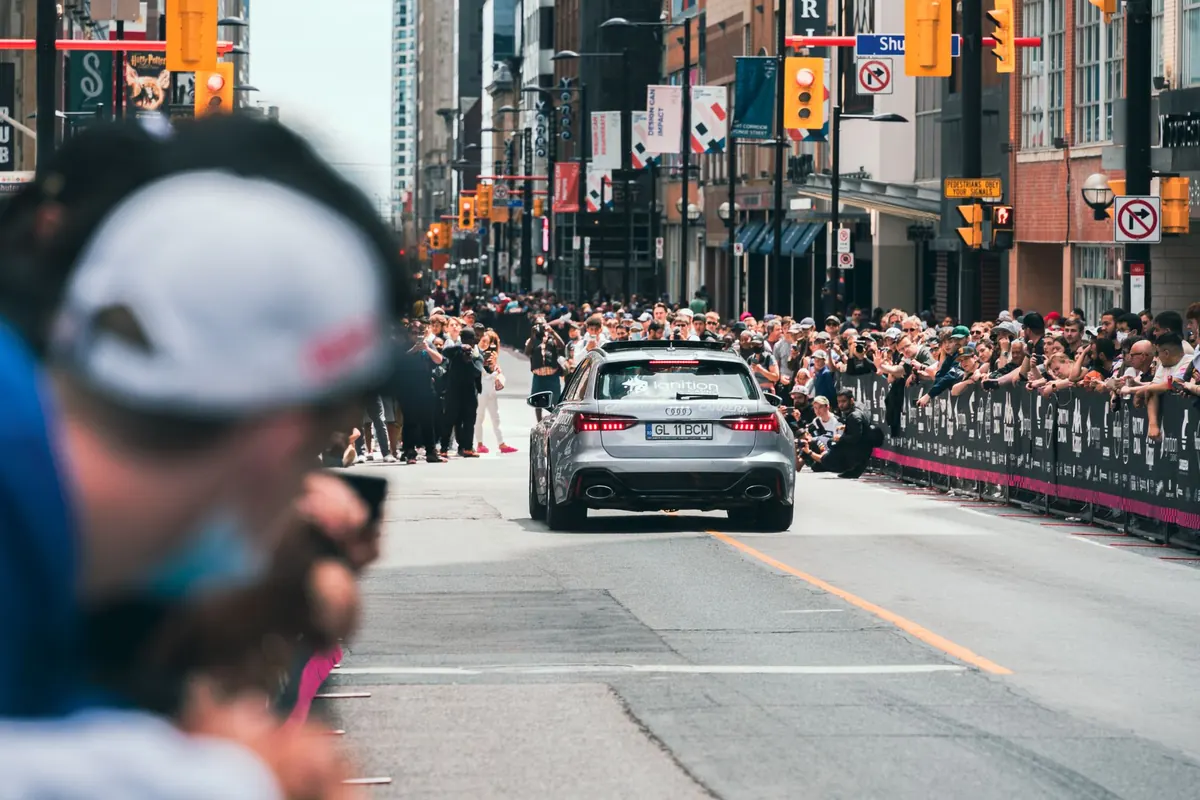
The best spot on television is not always the best spot in person. A grandstand gives you a seat, a view, and a roof if the weather turns; general admission gives you flexibility and atmosphere. Walk the perimeter early if you can. Look for a place where you can see a screen, hear the commentary, and still follow the action when the pack passes. At a circuit, corners and braking zones tend to produce more visible action than long straights, but they are also the most crowded.
If you want photographs, check whether your spot is behind a fence or catch fence. If you want to sit, bring a lightweight mat or check whether seats are provided. Pick a primary spot for the main race and a backup nearby. Trying to chase the perfect view all day usually means seeing less.
Pick one good spot, learn its exits, and let the day come to you.
Time the Day Around the Main Race
Arrive earlier than you think you need to. Security queues, bag checks, and the walk to the fence take longer than the map suggests. Use the early hours to find your spot, buy water, and learn the layout. Support races are worth watching; they often give you a cleaner view and a sense of how the day flows. Set phone alarms for the main race build-up and any pit walk or demonstration you want to see.
Do not rely on the crowd to tell you what is happening. Keep the timetable on your phone or in your pocket. If you leave your seat for food, go before the final support race, not five minutes before the start. Decide in advance whether you will stay for the podium or leave early to beat the traffic. Both are valid; drifting without a plan is what makes the day feel chaotic.
Dress for the Forecast, Then Add One Layer
Race days are long and exposed. Even a warm forecast can turn cool when the sun drops or the wind picks up, and a wet morning can clear by lunch. Check the forecast the night before and again in the morning, then pack for the worst hour, not the best. A waterproof shell that folds small is better than an umbrella in a crowded grandstand. Sunscreen, a hat, and sunglasses are not optional if you are outside all day. Ear protection matters at any event with engines; simple foam plugs are cheap and make conversation possible.
What to Put in the Bag
- Waterproof jacket with a hood
- Sun hat and high-factor sunscreen
- Comfortable, broken-in shoes
- Ear plugs for engine noise
- Portable phone charger
- Lightweight mat or folded blanket
- Tissues and hand sanitiser
- Any medication you might need, with a copy of the prescription
Bring a refillable bottle if the venue allows it and a small bag that fits under a seat. Leave the hard-sided cool box and the giant camera bag at home unless you have checked the rules.
Food, Drink, and the Crowd
Food queues peak before the main race. Eat earlier or bring a snack that travels well — nuts, fruit, a sandwich. Check the venue’s rules on bringing food and drink; many circuits allow sealed water but not glass. Alcohol is part of the atmosphere for some, but a long day in the sun is not the place to overdo it. If you are driving, keep it to zero. Drink water before you feel thirsty, especially in heat.
A Note on Heat and Crowds
If you have a health condition that makes heat, noise, or crowds risky, speak to your doctor before committing to a full day outdoors. Know where first aid is on the map, and set a meeting point for your group in case phones fail. A first race day should be tiring in the good way, not the worrying way.
The Final Check the Night Before
Lay out your clothes, ticket, ID, charger, and rain shell. Screenshot your tickets and the timetable; do not rely on signal. Check the transport plan and the last return. Tell someone at home what your rough plan is. On the day, leave early, walk at a pace you can keep, and give yourself permission to miss something. A first race day is not an exam. The goal is to come home tired, sunned, and already arguing about next year.
Photo: Alizain Hirani / Pexels